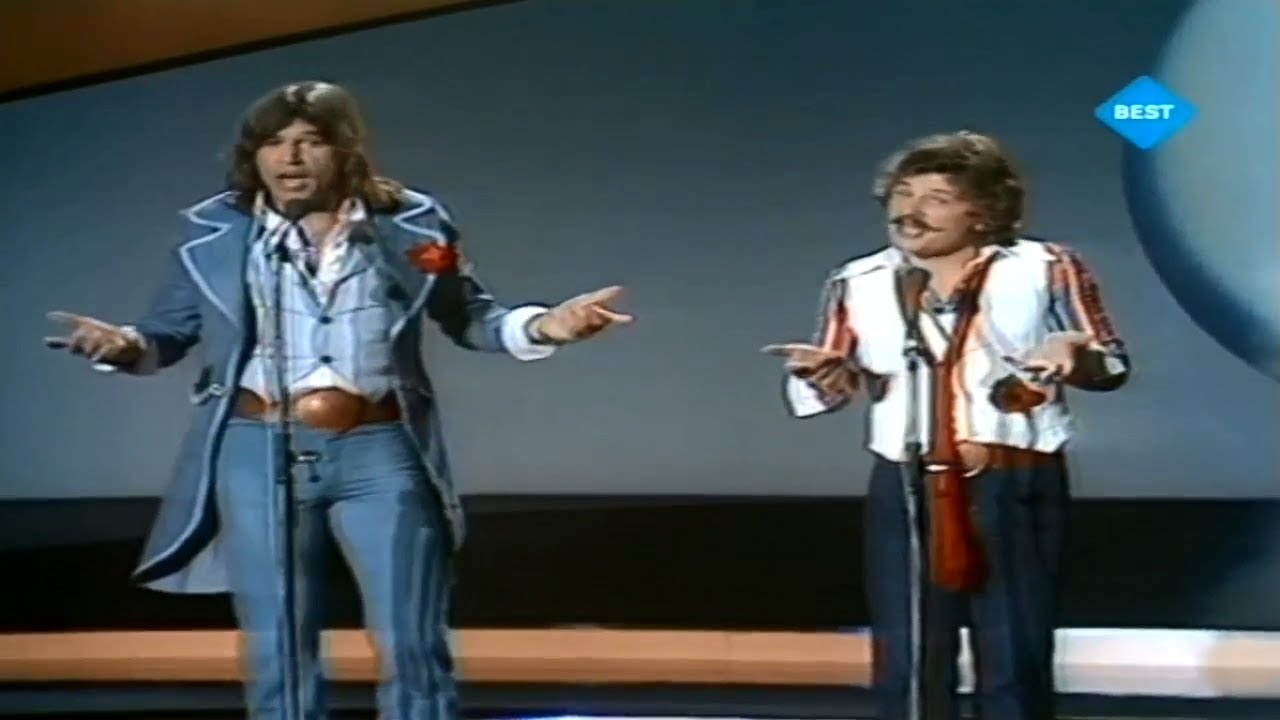
Waterloo & Robinson: Austria's Eurovision Pioneers & A Resilient Legacy
In the vibrant tapestry of Austrian pop music, few names shine as brightly and enduringly as Waterloo Und Robinson. Comprising the charismatic duo Johann "Waterloo" Kreuzmayr and Josef "Robinson" Krassnitzer, this band etched its name into the annals of music history, not just for their catchy tunes but also for their pioneering spirit at the Eurovision Song Contest and a memorable controversy that underscored their unwavering dedication. Their journey is a testament to perseverance, artistic evolution, and the passionate pursuit of musical excellence.
From Humble Beginnings to National Recognition
The story of Waterloo & Robinson began in 1969, an auspicious year that brought together Hans Kreuzmayr and Sepp Krassnitzer. Their initial encounter was not in a recording studio, but rather through Kreuzmayr's boutique, where he sought an employee for outfit design. Both musicians at heart, active in local bands, they soon discovered a shared musical vision. Before solidifying their now-iconic name, they performed under the provisional moniker "Edward Brothers," a humble start for what would become a celebrated pop duo.
Their early career saw steady progress. In 1971, they secured a respectable third place at the 'Show-Chance' with "Du kannst sehen," a poignant song about a blind girl that resonated with audiences. This initial success paved the way for a string of hits, including "Lili’s Haus," the track "Baby Blue" which became their first European hit, and the globally recognized "Hollywood." By June 1974, Waterloo Und Robinson had achieved a remarkable feat, holding both the number 1 and number 2 spots on the Austrian charts, solidifying their status as national darlings. Their journey from local acts to global hits is a fascinating dive into the dynamics of the 70s music scene. For a deeper exploration of their early career and ascent, check out: From Local Acts to Global Hits: The Waterloo & Robinson Journey.
Eurovision 1976: Breaking Barriers with "My Little World"
The year 1976 marked a pivotal moment for Waterloo & Robinson and for Austria's involvement in the Eurovision Song Contest. Representing their nation with the heartfelt ballad "My Little World," they achieved a commendable 5th-place finish, garnering 80 points. Beyond the impressive ranking, their performance carried a profound significance: "My Little World" was the very first time Austria had presented an entry sung entirely in English at the Contest. This move was not just a linguistic choice; it was a strategic decision that reflected a growing trend in Eurovision, aiming to broaden appeal and enhance understandability across Europe's diverse linguistic landscape.
Singing in English allowed their message to transcend national borders more easily, a bold step that many non-anglophone countries would later adopt. While a 5th-place finish might seem modest to some, for Austria, it was a strong showing and a clear signal of the duo's international potential. Their stage presence, coupled with the song's universal theme, left a lasting impression, showcasing their ability to connect with a wider audience.
The Shifting Sands of Success and a Fateful Split
Following their Eurovision triumph, Waterloo Und Robinson continued to ride a wave of success, though its geographical center began to shift. In 1978, their creative endeavors extended beyond music into filmmaking with "Wild Land," a movie shot in Kenya, which was accompanied by an album of the same name. This period showcased their versatility and ambition.
However, their popularity started gravitating towards Germany, where they became permanent fixtures on shows like the ZDF hit parade. Their 1979 release, "Do you remember Marianne," despite receiving relatively little attention in Austria, quickly achieved gold status in Germany. This disparity in success between their home country and Germany eventually led to internal disagreements and creative tensions. By 1981, the beloved pop duo decided to part ways, embarking on individual solo careers.
Waterloo, the more flamboyant of the two, achieved considerable success with his solo endeavors in Austria, even becoming the first Austrian to be recognized as the best German singer. Robinson, while also releasing solo albums and contributing to the productions of younger artists, maintained a quieter profile. Their story of navigating fame, dealing with geographical shifts in popularity, and the challenges leading to a split and eventual solo careers is fascinating. For more on this period and their comebacks, refer to: Waterloo & Robinson: Pop Duo's German Gold, Splits, & Comebacks.
The Resilient Comeback and the 2004 Eurovision Controversy
Despite their separation, the bond between Waterloo and Robinson proved resilient. After roughly a decade apart, they began tentative steps towards a reunion, performing together at concerts in 1989 and 1990. Their comeback saw them blend their classic 70s hits with new material, often incorporating Native American-influenced themes into their performances. This renewed partnership demonstrated their enduring appeal and artistic growth.
In 2002, they successfully returned to the Austrian charts with their cover of Opus's "Na Naa, Nanana – Live Is Life," which became a smash hit and spent seven weeks on the charts. This resurgence set the stage for their ambition to once again represent Austria at Eurovision.
The year 2004 brought them to the Austrian national preselection with their song "You Can Change the World." While they secured second place, losing out to the boyband Tie Break, their journey was marred by a significant controversy. Waterloo & Robinson vehemently protested Tie Break's winning entry, "Du bist," alleging that it exceeded the Eurovision Song Contest's strict three-minute time limit. Measurements varied slightly depending on the stereo system used, but the song consistently clocked in between 3:09 and 3:11.
Their frustration was palpable and articulated with powerful rhetoric. "If skiers battle over the tenth part of a second, we must be allowed to go to court because of a time exceeding of 5%," they were famously quoted as saying. This wasn't merely a casual complaint; they filed a formal legal challenge to Tie Break's performance, highlighting the seriousness with which artists view the Contest's rules. This incident underscored the immense pressure and the competitive spirit inherent in Eurovision, where even minor deviations from the rules can have major implications for an artist's career and a nation's representation. It serves as a strong reminder that for many artists, participating in Eurovision is not just about a performance, but about representing their country with integrity and adherence to the established guidelines.
A Lasting Legacy of Music and Resilience
The story of Waterloo Und Robinson is far more than just a series of musical releases and chart successes. It's a compelling narrative of two artists who consistently adapted, innovated, and fought for their place in the music world. From their early days as the "Edward Brothers" to their pioneering Eurovision performance in English, their career is marked by groundbreaking moments. The shifts in their popularity, the challenges of maintaining a duo, the eventual split, and their triumphant comebacks all paint a picture of artistic resilience.
Their protest in 2004, while unsuccessful in altering the outcome, cemented their image as principled competitors who believed in fair play and adherence to rules, especially on a platform as significant as Eurovision. Even after deciding in mid-2007 to refocus on their solo projects, their collective journey remains a cornerstone of Austrian pop history. They didn't just sing songs; they shaped a part of Austria's musical identity and left an indelible mark on the Eurovision saga, proving that true pioneers leave a legacy that transcends mere chart positions.